
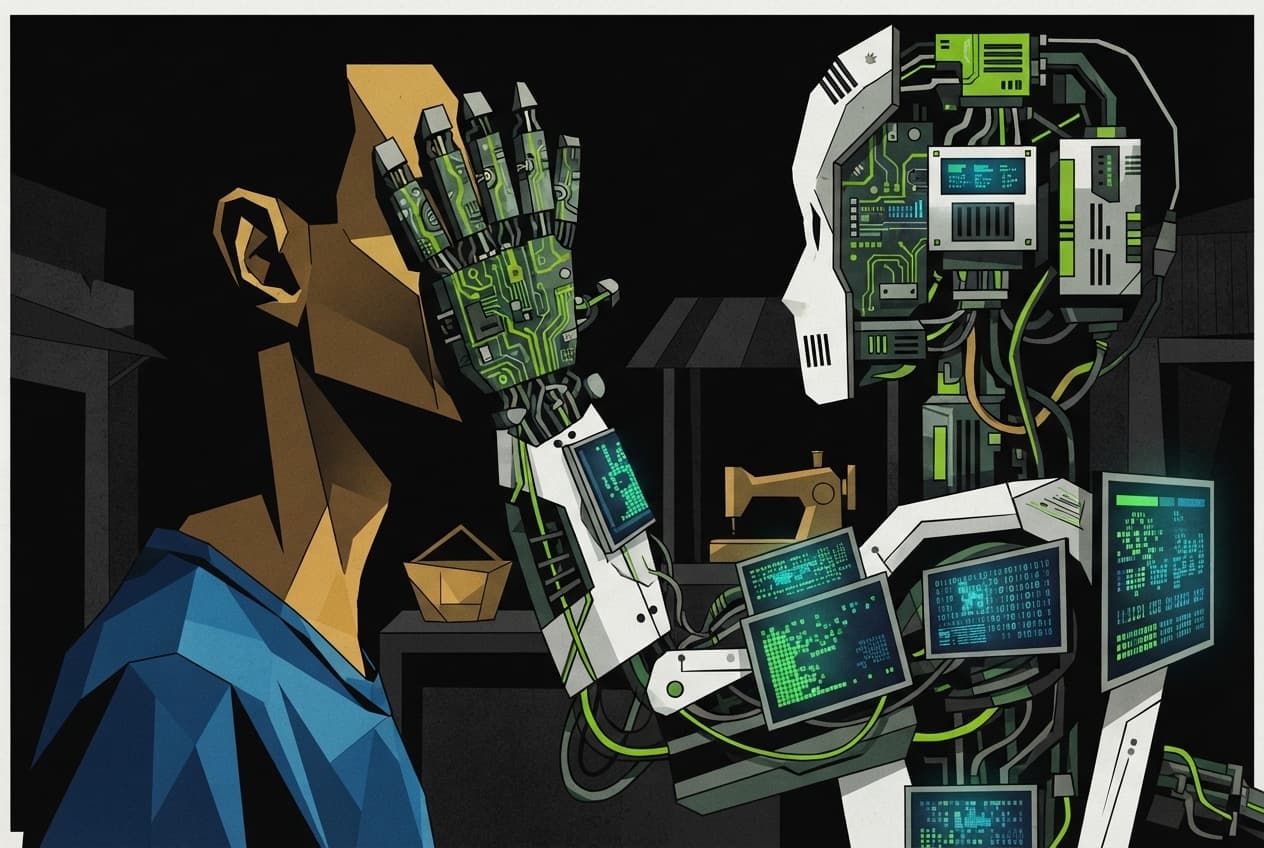
World Bank Group President Ajay Banga emphasized the institution's commitment to ensuring economic development translates into employment opportunities. He advocated for the deployment of AI to enhance productivity and foster job creation, rather than solely focusing on replacing human workers. Banga highlighted the potential of affordable, practical AI applications, termed "Small AI," to support sectors like education, healthcare, and agriculture for smallholder farmers.
The World Bank's October 2026 Africa Economic Update identifies Nigeria, Kenya, and South Africa as hubs for AI activity. However, the report cautions that adoption is in its nascent stages and that Africa's immediate opportunity lies in adapting accessible AI solutions to local challenges. Sectors such as agriculture, education, healthcare, finance, logistics, and public administration are seen as areas where AI can boost productivity.
Constraints to AI adoption in Africa include unreliable electricity, inadequate internet connectivity, limited digital skills, and poor-quality data. For Nigeria, the critical challenge is to build foundational infrastructure and ensure AI serves as a tool for productive job creation, thereby mitigating existing employment pressures. The global AI landscape shows a significant divide, with high-income countries dominating AI models, startups, and venture capital funding, while low- and middle-income countries face a "usage vs infrastructure gap" and a severe skills deficit.